Held annually on the Wouri River in Douala, the Ngondo Festival is the most important traditional celebration of the Sawa coastal peoples — a spectacular display of culture, spirituality, pirogue racing, and community.
Every year in December, the banks of the Wouri River in Douala come alive for the Ngondo — one of Cameroon's most spectacular and spiritually significant traditional festivals. For the Sawa peoples of the Littoral Region, the Ngondo is more than a celebration; it is a sacred communion between the living and the ancestors who dwell in the river, a reaffirmation of cultural identity, and a gathering that draws the Sawa diaspora home from around the world.
Origins and Spiritual Significance
The Ngondo has its roots in the spiritual traditions of the Duala people and their Sawa neighbours, who have inhabited the shores of the Wouri River Estuary for centuries. The festival serves as an occasion to consult the spirits of the river and the ancestors, seek their guidance for the community, and affirm the bonds connecting the living to their ancestral heritage. This is not a festival staged for tourists — it is a living spiritual tradition that happens to welcome respectful observers.
The Festival Programme: Days of Celebration
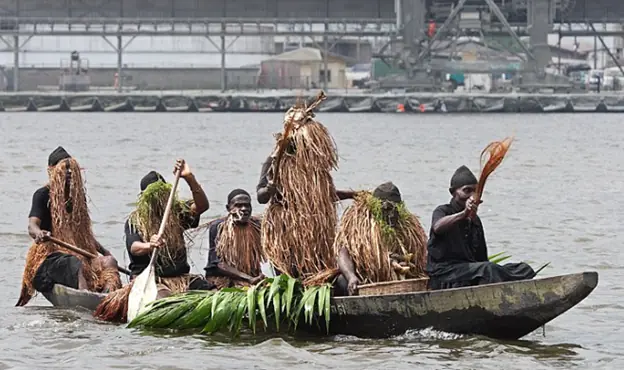
The Ngondo unfolds over several days with a rich programme. Traditional councils meet in sacred sessions to deliberate matters of community governance. Dance troupes from different Sawa communities perform in spectacular costumes that have been handed down through generations. Pirogue (dugout canoe) races on the Wouri River draw enormous crowds and fierce competition between communities. The highlight is the final river ceremony — a deeply moving spiritual ritual conducted by traditional priests that culminates in the retrieval of the sacred Nkom.
The Nkom: A Message from the Ancestors
The most spiritually significant moment is the retrieval of the Nkom — a sacred message from the ancestors — from the depths of the Wouri River. A designated diver descends into the dark waters and returns with a sealed vessel containing the message, believed to be a prophecy or guidance for the community in the coming year. The Nkom is interpreted by traditional priests and presented to the gathered community — a moment of extraordinary spiritual intensity.
Music, Dance, and Visual Splendor
The festival is a showcase of Sawa traditional music performed on drums, xylophones, and wind instruments. Dance performances feature elaborate costumes representing different clan traditions and histories — the visual spectacle of the Ngondo is unlike anything else in Cameroon.
When and Where
The Ngondo takes place annually in late November or December on the banks of the Wouri River in Douala's Bonanjo district. Exact dates follow the traditional calendar. Global Bush Travel can arrange festival attendance as part of a Douala or broader Cameroon itinerary — attending the Ngondo is one of the most powerful cultural experiences available in Central Africa.