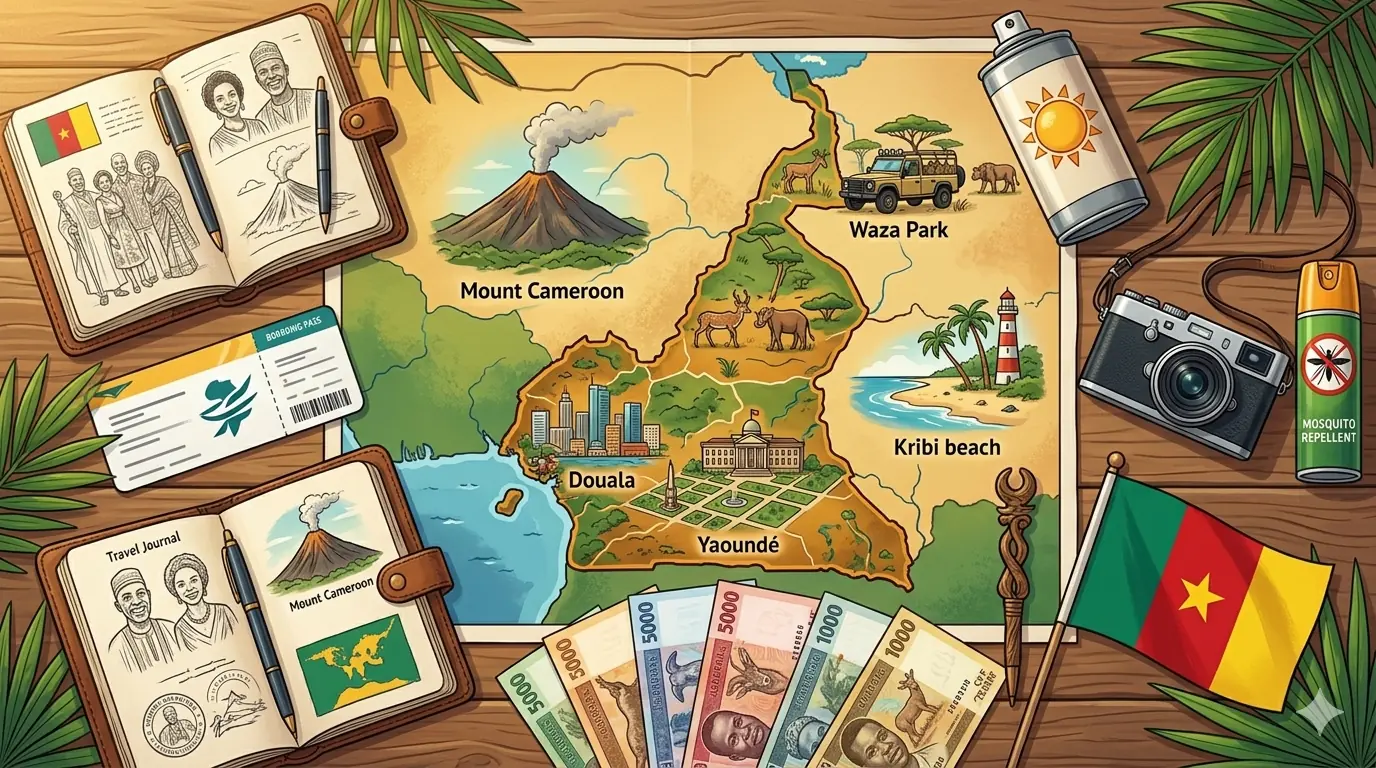
Everything you need to know before traveling to Cameroon — from visa requirements and best time to visit, to health precautions, currency tips, safety advice, and getting around this extraordinary country.
Planning a trip to Cameroon requires thoughtful preparation, but the rewards are extraordinary. This comprehensive guide covers every essential detail you need to travel safely, comfortably, and memorably to one of Africa's most fascinating and diverse destinations. Whether you are a first-time visitor or returning to explore new regions, this is your go-to resource for practical Cameroon travel information.
Entry Requirements & Visas: Getting In
Most international visitors require a visa to enter Cameroon. Visas can be obtained at Cameroonian embassies or high commissions in your country of residence. The process is straightforward when you know what is required: a valid passport with at least six months' remaining validity, completed application forms, recent passport photos, proof of accommodation, return flight tickets, and proof of sufficient funds.
A valid yellow fever vaccination certificate is mandatory for entry — no exceptions. Travelers without this document risk being denied entry or vaccinated at the airport at their own expense. Global Bush Travel provides embassy-ready flight and hotel reservations specifically designed for visa applications, simplifying the process considerably.
Best Time to Visit Cameroon
Cameroon's climate varies dramatically by region, so the "best" time depends on where you plan to go and what you want to do. As a general rule, the dry season from November to February offers the most comfortable conditions across most of the country — pleasant temperatures, passable roads, and excellent wildlife viewing as animals congregate around diminishing water sources.
The south experiences a longer rainy season with two distinct wet periods, while the north is drier overall with a single rainy season from May to October. The western highlands enjoy a temperate climate year-round thanks to their elevation. For birding enthusiasts, the wet season (June-September) brings migratory species and lush green landscapes that are spectacular in their own right.
Health Precautions: Staying Healthy
Yellow fever vaccination is required for entry. Beyond that, malaria prophylaxis is strongly recommended — malaria is prevalent throughout the country year-round. Visit a travel health clinic at least six to eight weeks before departure for personalized advice. Other recommended vaccinations include hepatitis A and B, typhoid, meningitis, and rabies for those planning remote adventures.
Drink only bottled or purified water. Take standard food hygiene precautions. Ensure you have comprehensive travel health insurance that covers medical evacuation — medical facilities outside Douala and Yaoundé are limited.
Getting There: International Flights
Douala International Airport (DLA) is the main gateway, with direct flights from Paris (Air France), Brussels (Brussels Airlines), Istanbul (Turkish Airlines), and multiple African cities via Ethiopian Airlines. Yaoundé Nsimalen International Airport (NSI) also receives international flights. Global Bush Travel offers competitive fares on all major routes and can handle all flight logistics as part of your travel package.
Getting Around: Internal Transport
Internal travel options include domestic flights between major cities (particularly useful for reaching the Far North), intercity bus services operated by companies like Général Express Voyages, shared taxis known as "clandos," motorcycle taxis called "benskin" or "motos," car rentals, and the iconic Transcamerounais railway between Yaoundé and Ngaoundéré.
For most tourists, a combination of domestic flights for long distances and private vehicle transfers with experienced drivers for regional exploration provides the best balance of comfort, safety, and flexibility. Global Bush Travel arranges all internal transport logistics seamlessly.
Currency & Money Matters
Cameroon uses the Central African CFA Franc (XAF), pegged to the Euro at a fixed rate of 655.957 XAF to 1 EUR. ATMs are available in Douala and Yaoundé but can be unreliable. MTN Mobile Money and Orange Money are widely used for everyday transactions and can be very convenient once you have a local SIM card.
Carry a mix of cash and cards. Major hotels accept credit cards, but cash is essential for markets, smaller establishments, and rural areas. Global Bush Travel accepts Visa, Mastercard, PayPal, and mobile money payments.
Language: Communicating in Cameroon
Cameroon is officially bilingual in French and English — the legacy of its colonial history under both French and British administration. French is dominant in eight of the country's ten regions, while English is primarily spoken in the Northwest and Southwest regions. Cameroonian Pidgin English is widely understood across the country and serves as an informal lingua franca.
Safety: What You Need to Know
Most of Cameroon's tourist destinations are safe for visitors. However, the Northwest and Southwest regions are affected by an ongoing security situation since 2016, and travel to these areas is not recommended for tourists. The Far North region near the Nigerian and Chadian borders also requires caution. Always check current travel advisories from your government and travel with a reputable local agency like Global Bush Travel, which monitors conditions on the ground and provides real-time safety guidance.