
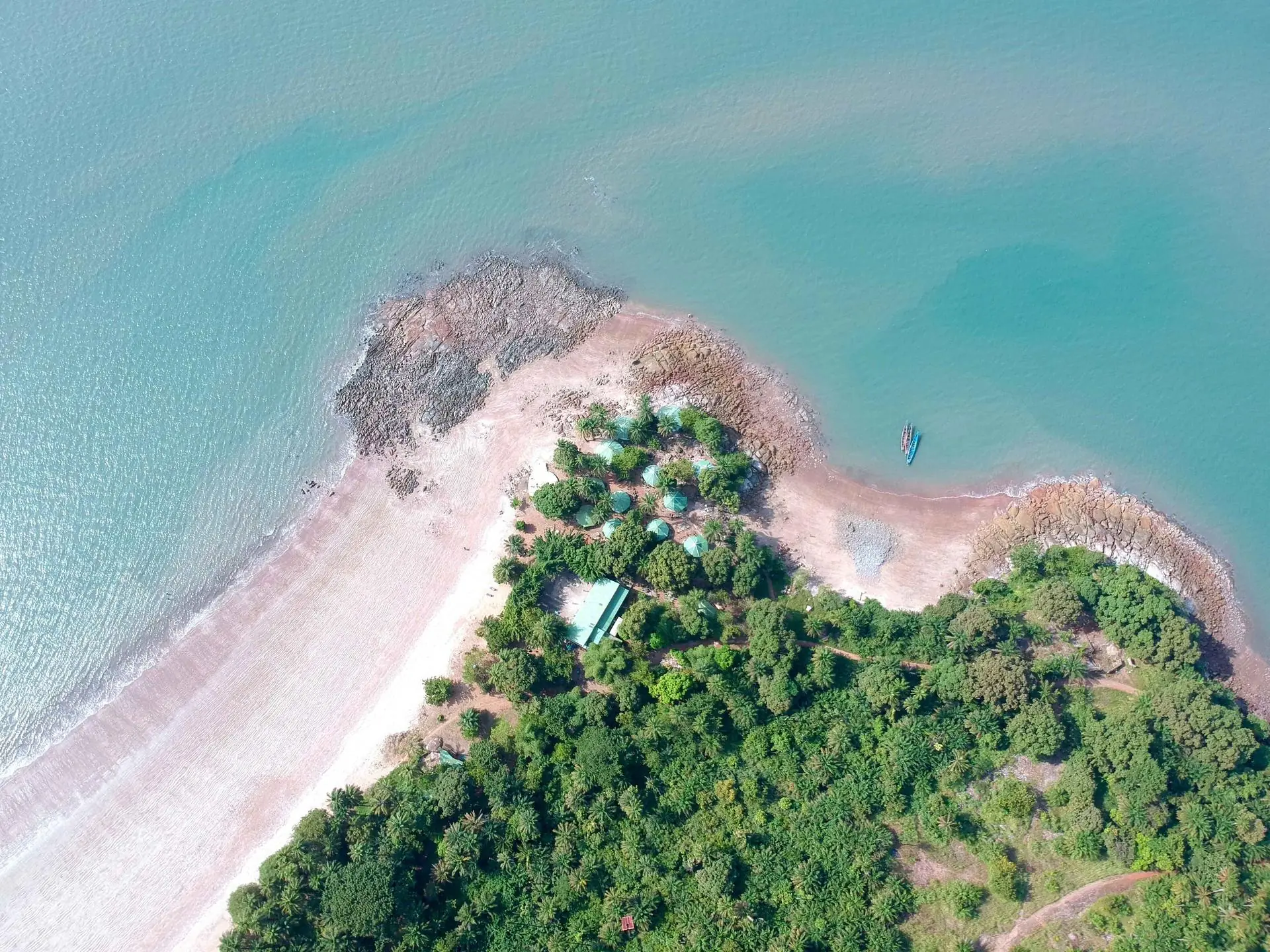
Explorez la Guinée Équatoriale, une destination unique combinant l'île volcanique Bioko, des forêts tropicales pristines, une faune endémique et un patrimoine colonial espagnol au cœur de l'Afrique Centrale.
Nichée dans le golfe de Guinée, là où l'océan Atlantique rencontre la dense côte tropicale de l'Afrique centrale, se cache l'un des secrets les mieux gardés du continent. La Guinée Équatoriale est une petite nation qui défie les attentes à chaque instant — un lieu où des pics volcaniques percent les nuages, où des primates en danger critique d'extinction se balancent dans des canopées millénaires, et où les échos de l'histoire coloniale espagnole se mêlent harmonieusement aux vibrantes traditions africaines. Pour le voyageur aventureux en quête d'une expérience véritablement hors des sentiers battus, la Guinée Équatoriale offre une aventure sans pareille au monde.
Malgré son statut de l'une des nations les plus riches par habitant en Afrique, la Guinée Équatoriale reste virtuellement inconnue sur la carte touristique mondiale. Ce paradoxe joue en faveur du voyageur : les écosystèmes préservés restent intacts, les rencontres culturelles sont d'une authenticité rare, et le sentiment de découverte est palpable à chaque étape. Que vous arriviez sur les rivages volcaniques de l'île Bioko ou que vous vous aventuriez dans les forêts tropicales impénétrables du continent, vous pénétrez dans un monde que peu d'étrangers ont jamais contemplé.
Pourquoi la Guinée Équatoriale mérite une place sur votre liste de voyages
Dans une région où le Cameroun et le Gabon voisins attirent de plus en plus d'amateurs de faune sauvage et d'écotouristes, la Guinée Équatoriale reste un secret magnifiquement préservé qui n'attend qu'à être découvert. Mais ce qui rend cette petite nation vraiment spéciale, ce n'est pas seulement son obscurité — c'est l'extraordinaire concentration d'expériences uniques réunies dans un pays de la taille du Maryland.
Considérez ce qui vous attend : des primates endémiques qui n'existent nulle part ailleurs sur la planète, présents uniquement sur les pentes brumeuses de l'île Bioko. Un parc national sur le continent — Monte Alén — où des gorilles des plaines de l'Ouest et des éléphants de forêt errent dans l'une des dernières grandes forêts tropicales intactes d'Afrique centrale. Des paysages volcaniques si spectaculaires qu'ils semblent tirés d'un autre monde. Et tissant le tout, une fascinante tapisserie culturelle mêlant patrimoine colonial espagnol, traditions Fang et Bubi, et rythmes de la vie africaine moderne.
La position unique du pays en tant que seule nation hispanophone d'Afrique ajoute une couche supplémentaire d'intrigue. Les panneaux de signalisation à Malabo sont en espagnol. Des cathédrales catholiques côtoient les maisons de réunion traditionnelles. La cuisine mêle influences ibériques et ingrédients tropicaux africains. C'est, à tous égards, une destination qui remet en question vos préconceptions sur ce que l'Afrique peut offrir.
L'île Bioko : là où le feu volcanique rencontre la forêt tropicale émeraude
Si la Guinée Équatoriale possède un joyau de la couronne, c'est incontestablement l'île Bioko. S'élevant dramatiquement du golfe de Guinée comme une immense forteresse volcanique, Bioko est une île de 2 017 kilomètres carrés d'une richesse naturelle extraordinaire. Géologiquement, elle fait partie de la même chaîne volcanique qui inclut le mont Cameroun au nord et São Tomé au sud — une chaîne de feu s'étendant à travers l'Atlantique qui a façonné ce coin d'Afrique pendant des millions d'années.
L'isolement de l'île par rapport au continent africain — séparée par environ 32 kilomètres d'océan ouvert — a créé un laboratoire naturel d'évolution. Les espèces qui sont arrivées sur les rivages de Bioko il y a des millénaires ont évolué dans un splendide isolement, développant des caractéristiques uniques au monde. Pour les biologistes, les photographes animaliers et les passionnés de nature, cela fait de Bioko l'une des îles les plus importantes scientifiquement au monde.
Primates endémiques : des espèces uniques au monde
L'île Bioko abrite certaines des espèces de primates les plus menacées de la planète, et les rencontrer dans leur habitat naturel est une expérience qui vous marque à vie. L'île héberge onze espèces de primates, dont plusieurs sont des sous-espèces endémiques qu'on ne trouve qu'ici — faisant d'elle l'un des sites de conservation des primates les plus importants de toute l'Afrique.
Parmi les espèces les plus recherchées figurent le Colobe Rouge de Pennant (Piliocolobus pennantii), un singe d'une beauté saisissante au pelage roux qui contraste vivement avec la canopée forestière d'un vert profond. Tout aussi remarquable est le Drill de Bioko (Mandrillus leucophaeus poensis), une sous-espèce du drill continental qui a développé des caractéristiques distinctives au cours de ses millénaires d'isolement insulaire.
Pico Basilé : conquérir le plus haut sommet de Guinée Équatoriale
À 3 011 mètres d'altitude, Pico Basilé domine l'horizon nord de l'île Bioko et constitue le point culminant de toute la Guinée Équatoriale. Pour les randonneurs et les passionnés de montagne, l'ascension offre bien plus qu'un défi physique — c'est un voyage à travers plusieurs mondes empilés les uns sur les autres.
Le trek commence dans les forêts humides des basses terres entourant Malabo, où l'air est chargé d'humidité et la bande sonore est un chœur constant de chants d'oiseaux et de bourdonnements d'insectes. Au fur et à mesure de la montée, la végétation change radicalement. La forêt tropicale de basse altitude cède la place à la forêt de montagne, où des arbres drapés de mousse créent une atmosphère éthérée. Plus haut encore, la forêt s'amincit en forêt de nuages puis en prairie subalpine près du sommet.
Par temps clair, le sommet récompense les grimpeurs avec une vue panoramique spectaculaire. Le golfe de Guinée s'étend à perte de vue vers l'ouest, la masse verte du continent africain se dresse à l'est, et les pics volcaniques de São Tomé-et-Príncipe peuvent être visibles au loin vers le sud.
Parc National de Monte Alén : une cathédrale de forêt tropicale sur le continent
Tandis que l'île Bioko captive l'imagination avec son drame volcanique et ses espèces insulaires endémiques, la région continentale de Río Muni recèle son propre trésor : le Parc National de Monte Alén. Couvrant environ 2 000 kilomètres carrés de forêt équatoriale pratiquement ininterrompue, Monte Alén protège l'une des zones sauvages les plus importantes et les moins visitées d'Afrique centrale.
Le parc abrite des gorilles des plaines de l'Ouest, des éléphants de forêt, des chimpanzés, des léopards, et une extraordinaire diversité d'espèces d'oiseaux. Ce qui rend Monte Alén particulièrement spécial, c'est sa combinaison d'accessibilité et de nature sauvage intacte.
Malabo : où l'élégance coloniale rencontre la vitalité africaine
La capitale Malabo, perchée sur la côte nord de l'île Bioko, est une ville de contrastes fascinants. Le cœur colonial de la ville présente des boulevards bordés d'arbres, des bâtiments aux couleurs pastel avec des balcons en fer forgé, et des places publiques qui ne dépareraient pas dans une petite ville espagnole. La Cathédrale de Santa Isabel, chef-d'œuvre néogothique achevé en 1916, est peut-être le monument le plus emblématique de la ville.
Mais Malabo est bien plus qu'une pièce de musée coloniale. La ville vibre d'énergie africaine — marchés animés, bars où l'Afrobeat et la pop espagnole se disputent l'attention, et restaurants où vous pouvez savourer la fusion unique des traditions culinaires espagnoles et africaines.
La meilleure période pour visiter
La fenêtre optimale pour visiter la Guinée Équatoriale se situe pendant la saison sèche de décembre à février. Durant ces mois, les précipitations diminuent significativement, l'humidité baisse à des niveaux plus supportables, et les sentiers forestiers deviennent plus faciles à emprunter. L'observation de la faune s'améliore également car les animaux sont plus prévisibles dans leurs déplacements.
Cela dit, la situation équatoriale du pays signifie que la pluie est possible à tout moment de l'année, et la verdure luxuriante pendant la saison des pluies (mai à octobre) a son propre charme puissant.
Planifiez votre voyage avec Global Bush Travel
Global Bush Travel opère en Guinée Équatoriale depuis 2010, offrant des services de voyage complets :
- Itinéraires d'exploration personnalisés : Des circuits sur mesure combinant les merveilles volcaniques de l'île Bioko et les expéditions en forêt tropicale continentale.
- Transferts aéroportuaires fluides : Des services fiables de prise en charge et de dépôt à l'aéroport de Malabo.
- Hébergement sélectionné : Les meilleures options d'hébergement dans toutes les gammes de prix.
- Location de véhicules professionnels : Notre flotte de 4x4 bien entretenus avec des chauffeurs locaux expérimentés.
- Services d'accueil VIP : Assistance premium à l'aéroport pour une arrivée en douceur.
Notre équipe bilingue — maîtrisant l'espagnol et l'anglais — fournit des informations culturelles approfondies et une communication fluide tout au long de votre voyage. Découvrez le paradis caché de la Guinée Équatoriale — où les pics volcaniques percent les nuages au-dessus de forêts tropicales préservées, et où la faune endémique erre sur des terres que le temps a oubliées. Laissez Global Bush Travel être votre passerelle vers cette destination extraordinaire.