
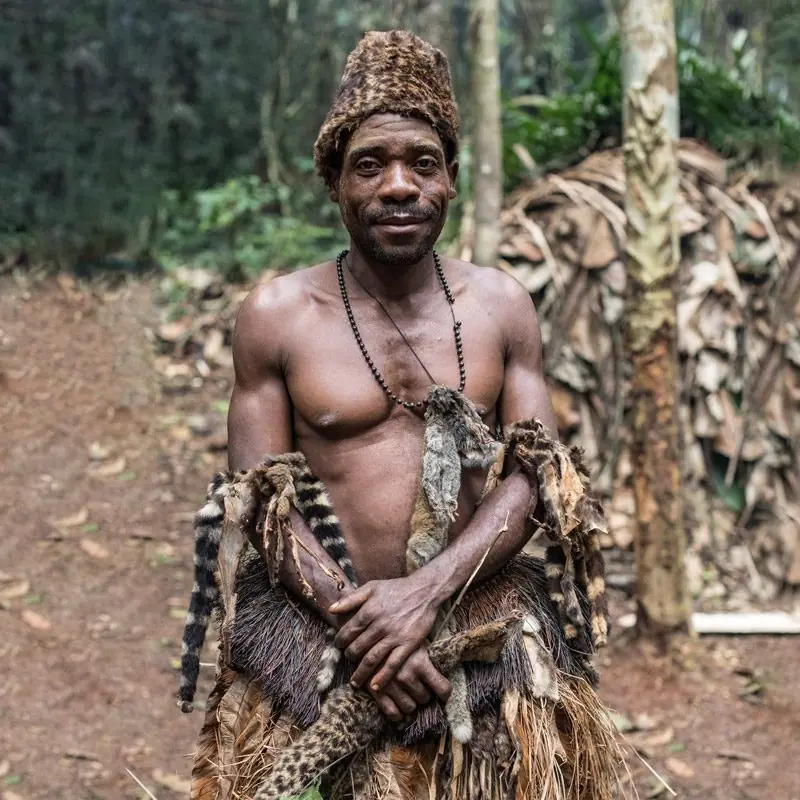
The Baka pygmy peoples of Cameroon's southern rainforests have lived in the forest for millennia, maintaining extraordinary ecological knowledge and cultural traditions that are both ancient and increasingly under pressure.
The Baka — one of the groups collectively known as pygmy peoples — are the original inhabitants of Cameroon's southern rainforests. Their way of life, their extraordinary knowledge of the forest ecosystem, and their rich cultural traditions represent a living connection to one of humanity's oldest relationships with the natural world. Understanding and respecting the Baka is essential for any traveler venturing into Cameroon's forest regions.
Who Are the Baka?
The Baka people number approximately 40,000 in Cameroon, living in small communities in the forest zones of the South and East Regions. Traditionally semi-nomadic hunter-gatherers, many Baka communities have transitioned to more settled lifestyles along forest roads while maintaining deep connections to the forest for food, medicine, spiritual practice, and cultural identity.
Forest Knowledge: Humanity's Greatest Ecological Library
The Baka's knowledge of the rainforest ecosystem is extraordinary and represents one of humanity's great bodies of indigenous ecological knowledge. They know hundreds of plants — their medicinal properties, their uses as food, tools, building materials, and poisons for hunting. They can track and identify animals by sound, footprint, and scat with remarkable precision. They understand seasonal patterns of fruiting, flowering, and animal movement that Western science is only beginning to document. This knowledge, accumulated over millennia of intimate forest living, is irreplaceable.
Traditional Music: A UNESCO-Recognized Heritage
Baka music is internationally celebrated and has been recognized by ethnomusicologists as one of the world's great musical traditions. Their complex polyphonic vocal music — where multiple independent melodies interweave to create extraordinarily rich harmonies — mimics the sounds of the forest and accompanies spiritual ceremonies. Traditional dances, mask ceremonies, and coming-of-age rituals maintain cultural continuity across generations.
Challenges Facing the Baka
The Baka face significant challenges including marginalization, loss of forest access due to logging concessions and conservation restrictions that paradoxically exclude them from lands they have stewarded for millennia, and the disruption of traditional ways of life. NGOs and community organizations work to support Baka rights and ensure that development respects their cultural integrity.
Responsible Cultural Tourism
Visits to Baka communities should only be arranged through organizations working directly with the communities in question, ensuring that tourism revenue reaches community members and that visits are conducted with appropriate cultural sensitivity. This is not a zoo visit — it is a cultural exchange that requires respect, openness, and genuine interest.
Global Bush Travel partners exclusively with responsible operators for Baka cultural experience programmes, ensuring that every visit is conducted ethically, with the full consent of the community, and with tangible benefits flowing back to Baka families.