
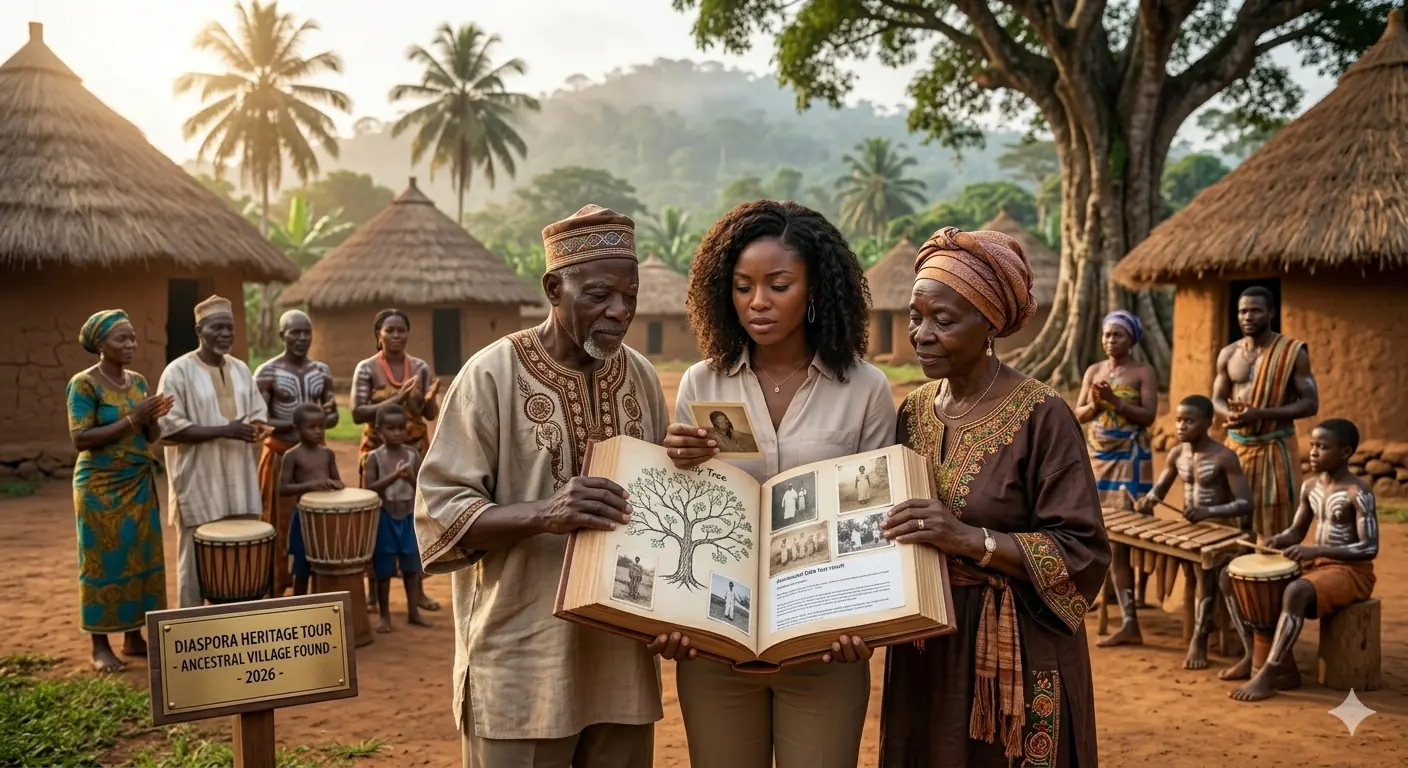
Return to your ancestral village, meet your extended family, learn your native language, and participate in traditional ceremonies. A deeply personal journey that every diaspora Cameroonian should take.
For many in the diaspora, the most powerful reason to return to Cameroon is not business or beaches — it is identity. To walk the red earth where your grandparents walked. To hear the rhythm of your mother tongue spoken fluently. To sit with a chief who carries the history of your clan. This is heritage tourism, and it is one of the most transformative experiences you can have.
Why Trace Your Roots?
Generations born abroad often feel a hollow sense of "where do I really come from?" A DNA test can tell you Bamiléké or Beti or Fulani — but only a visit can show you the compound where your father was born, the sacred forest where ancestors are honoured, the dance steps that tell your clan's story. It fills an identity gap that no degree or bank account can fill.
How to Prepare
1. Gather family information: Talk to parents, grandparents, aunts. Write down village names, family names (including maiden names), and any stories or landmarks. Older relatives may have old letters or photos.
2. Contact the village chief or family head: Before you arrive, have a family member or local contact inform the chief (chef de terre or fon) of your visit. A small gift (kola nuts, money, or wine) is customary to present when you arrive.
3. Learn a few words: Even basic greetings in your native language (Bamiléké, Ewondo, Fulfulde, etc.) will open hearts. Bring a small notebook to record names and stories.
What to Expect During Your Visit
You will likely be received with ceremony — especially if you are the first of your branch to return. Expect to meet many relatives (some you never knew existed), share a meal (often chicken and plantains), and possibly witness or participate in a small traditional rite (pouring libation, visiting a sacred site). Do not rush. Plan at least two to three days in the village.
Gift‑Giving Etiquette
It is customary to bring gifts for the family and chief. Practical items: rice, oil, sugar, soap, cloth, or cash envelopes. Do not arrive empty‑handed. The value is less important than the gesture.
Challenges and How to Overcome Them
Language barriers — bring a translator if you don't speak the local language. Cultural misunderstandings — ask before taking photos or entering certain areas. Time — village time is slower; be patient. Global Bush Travel can arrange heritage tours with local guides who speak your ancestral language and can facilitate introductions to chiefs and family heads. We also help with transport to remote villages and safe accommodation nearby.
Your ancestors are waiting. Go home and listen.